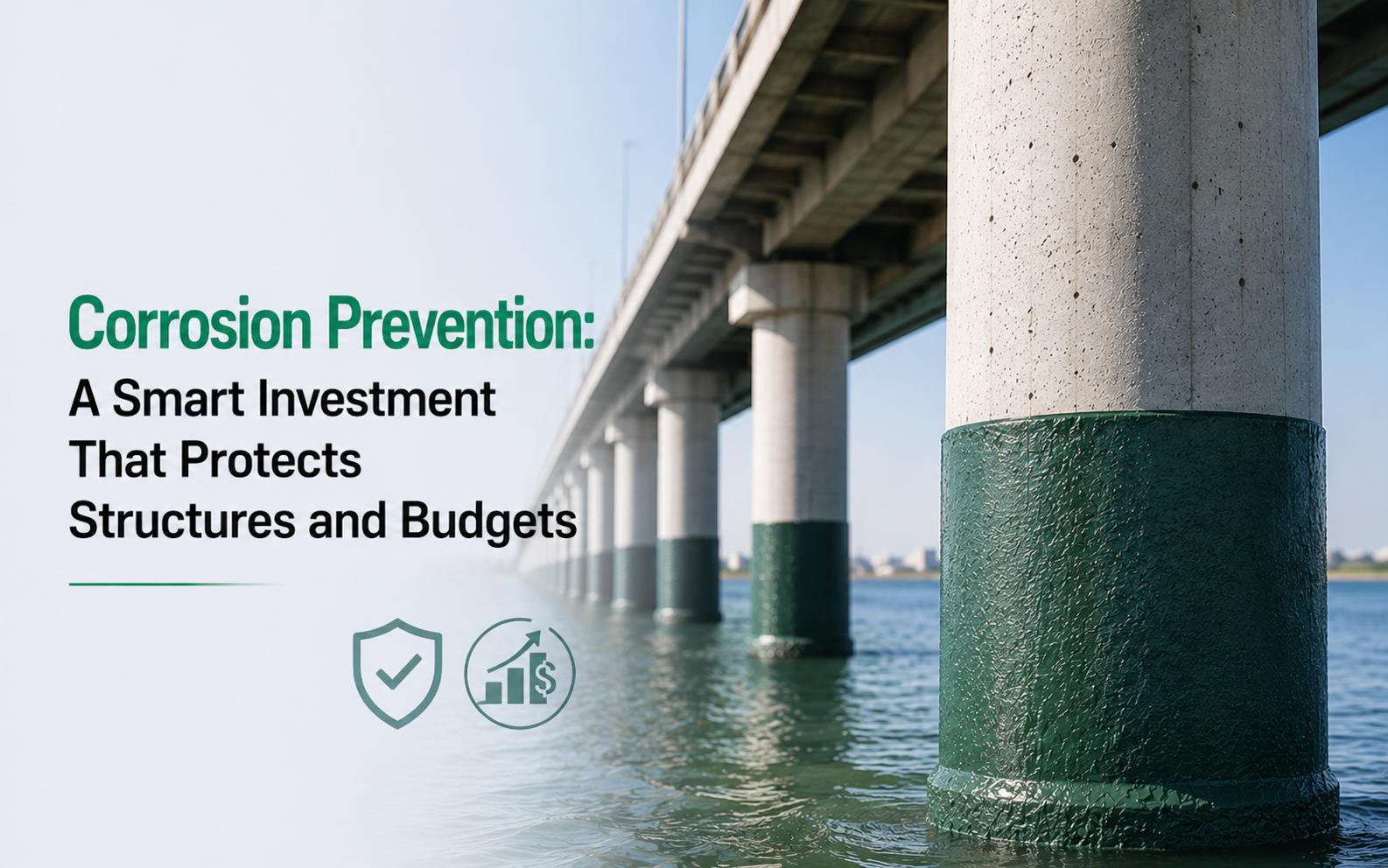
Corrosion is one of the major causes in deterioration of steel and reinforced concrete structures. The additional pressure on the structure and the need to mend it up when steel starts to corrode. These issues can impact bridges, parking garages, industrial buildings, and commercial facilities.
Corrosion control from day one protects assets while minimizing unforeseen maintenance expenditures. Small time investment in protection now means large expense later.
What Causes Corrosion?
It undergoes a natural reaction with the mercurous chloride, well-done oxides, and moisture. Corrosion or rusting occurs in even less time with the addition of salt table, chemicals, and/or pollution. Rust takes up more space and, in being made, puts pressure on concrete − splitting or damaging the surface.
A few situations that make for corrosive wire are given below.
- High humidity
- Coastal environments
- Water penetration
- Poor drainage
- Damaged protective coatings
The first step to properly prevent corrosion is identifying these risks.
See also: Data Destruction Companies: Protecting Sensitive Information Through Secure IT Asset Disposal
Prevent Problems Before They Start
Quality construction begins with its concept of durability. Using non-corrodible materials, high-performance concrete, and protective coatings stronger defense against the environment.
If the reinforcement steel in concrete is fully covered, there will not be moisture and any environmental influence on it if you use good construction practice, provide proper drainage conditions, inspection, and maintenance. These preventive measures not only enhance the overall performance of any particular artefact structure, but also minimize future repairs.
Save Money During the Life Cycle of the Buildings
Cost save is one of the most important benefit of corrosion prevention. It is almost always cheaper to avoid damage than it is to repair or replace decayed structural elements.
This is the reason many engineers, contractors, and property owners understand that cost-saving benefits of corrosion prevention reduces emergency repairs, enhances maintenance budget expenditures, and prolongs useful life of buildings/infrastructure. Spending within maintenance budgets on work that keeps the protection, community, and destruction budgets available for potential future areas of risk.
Maintenance Supports Lasting Protection
All well-built structures need maintenance regularly. How petty problems can become on the mentioned process into time costly structural issues.
You should conduct a basic maintenance plan with:
- Inspecting concrete and steel regularly
- Fixing cracks when they form
- Cleaning drainage systems
- Maintaining protective coatings
- Monitoring components in the water or chemicals
Overall efforts for corrosion prevention are supported by these measures to maintain the integrity of structures.
Long-Term Value Beyond Repairs
More than reduced repair costs, pollution prevention brings additional advantages. Any well-cared obvious structures tend to be safer, more efficient, and incur significantly less service disruption. They also sustain their value longer.
This gives owners peace of mind knowing their investment is secure and contractors provide projects that’s built to last.
Final Thoughts
One of the most effective methods of increasing the lifespan of reinforced concrete and steel structures are prevention against corrosion. To avoid the risk of corrosion, construction experts can place theirs trust on quality work materials, effective design, and proper installation combined with frequent maintenance.
Understanding these savings into decisions will enable project owners to do just that: protect their structure, while considering the budget. By adopting a proactive maintenance strategy, you increase longevity and get dividends in the long run for years to come.
