Reviewed by a licensed speech-language pathologist
Quick answer: Modeling language means giving your toddler clear, natural words to hear without pressuring them to talk back. You narrate daily life, name what your child looks at, add one word to what they offer, and pause so they can respond. Done gently and often, it builds the foundation talking rests on.
When a toddler is not talking yet, many parents feel stuck between doing too much and doing too little. Should you quiz them on words? Stay quiet and wait? The middle path, and the one most speech-language pathologists recommend, is called modeling. It means showing your child what language sounds like in everyday moments, so they soak it up before they produce it. This kind of language modeling for a toddler is something you can start today, without special materials, and it fits into things you already do.
What does modeling language actually mean?
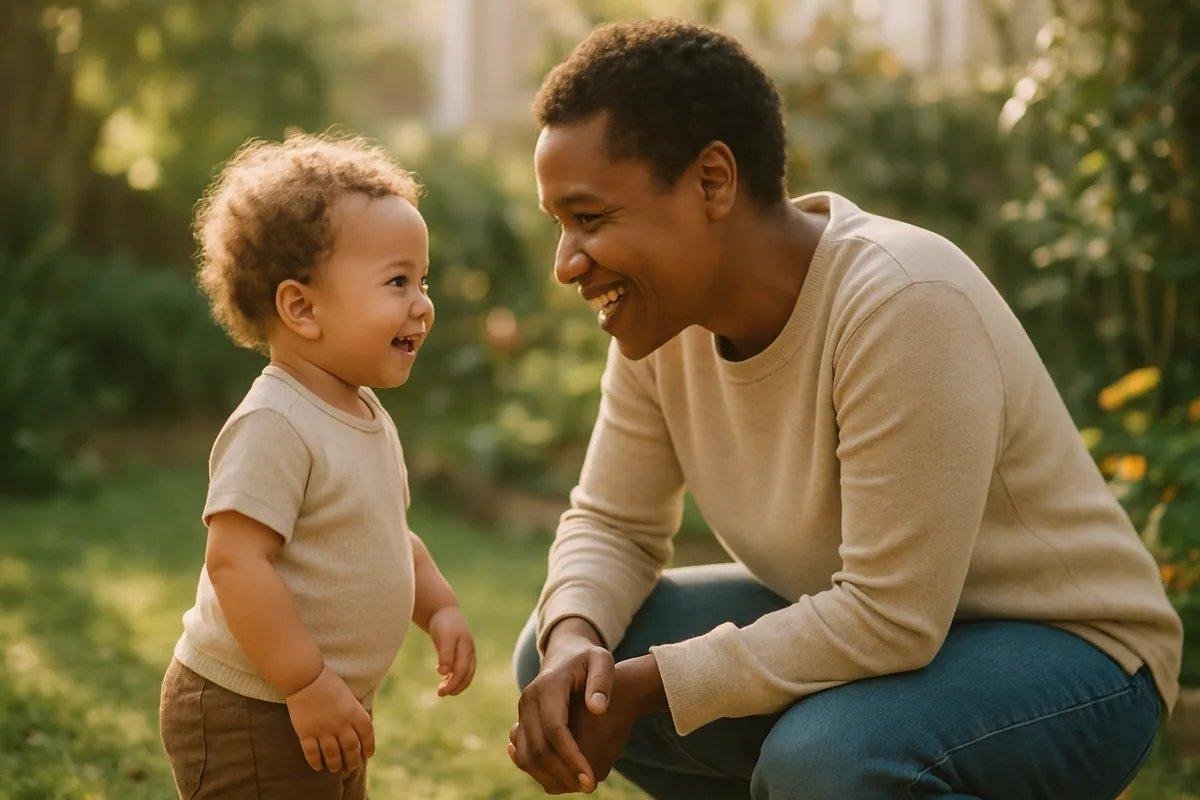
Modeling is the everyday act of putting words to the world around your child. Instead of testing them, you demonstrate. You say the name of the ball as you roll it. You describe the bath water as warm. You give your child a steady stream of words tied to what they see, feel, and want, so language becomes background music they gradually learn to sing along with.
Children learn to understand words long before they say them. The American Speech-Language-Hearing Association notes that comprehension usually runs ahead of spoken language in early development, which is why hearing rich, well-timed language matters even when a child is silent. You are filling the tank before the engine turns over.
How do I narrate without overwhelming my child?
Narration is powerful, but more is not always better. The goal is short, clear phrases attached to whatever has your child’s attention right now. If they are stacking blocks, you might say “big block,” then “up,” then “it fell.” You are not delivering a lecture. You are labeling the moment they already care about.
Two habits keep narration effective. First, follow your child’s focus rather than redirecting it. When you name the thing they are already looking at, the word and the object line up in their mind. Second, use simple language just slightly above what they can say. If your child uses single words, model two-word phrases. If they use no words yet, model single, clear words repeated across the day.
Why does pausing matter so much?
One of the most common mistakes caring parents make is filling every silence. Talking is important, but so is leaving room. After you model a word or ask a question, wait. Count slowly in your head if you need to. That pause tells your child it is their turn and gives them the time many late talkers need to gather a response.
A response does not have to be a word. A glance, a point, a reach, or a sound all count as communication, and you can honor them by responding as though your child spoke. The Hanen Center, which trains parents in early language strategies, emphasizes this kind of balanced back-and-forth where the adult observes, waits, and then responds to whatever the child offers.
What are the most useful modeling techniques?
A handful of simple techniques cover most everyday moments:
- Self-talk: describe what you are doing as you do it. “I’m washing the cup. All clean.”
- Parallel talk: describe what your child is doing. “You’re pushing the car. Fast car.”
- Expansion: take what your child says and add to it. If they say “dog,” you say “big dog.”
- Repetition: use the same key words many times across different moments so they stick.
- Choices: offer two options out loud. “Apple or banana?” This gives a word to reach for.
None of these require you to correct your child. If they say “wawa” for water, you simply model the word back naturally: “Water, here’s your water.” They hear the correct version without feeling wrong.
Can tools and apps support modeling at home?
Real conversation with a caregiver is the strongest engine for early language, and no product replaces it. That said, some families like extra low-pressure practice between the moments of daily life, especially if their child is waiting for or already receiving therapy. Voice-first, play-based tools such as the Little Words speech companion can give a toddler short, positive chances to hear and try words at home, which can complement the modeling parents do and the work a speech-language pathologist leads. The key is to keep it light and treat any such tool as a supplement to therapy and everyday talk, never a substitute for either.
Whatever you use, the same principles apply: follow the child’s interest, keep it short, pause, and celebrate any attempt.
When should modeling be paired with professional help?
Modeling is helpful for every young child, but some signs suggest it is time to add an evaluation. The Centers for Disease Control and Prevention lists language milestones by age and encourages families to act early if a child is not meeting them. Reduced words at 18 months, very few words by age two, or trouble understanding simple requests are all reasons to reach out.
Asking for help is not giving up on home strategies. It layers expert guidance on top of them. A speech-language pathologist can watch how your child communicates and tailor modeling techniques to their exact stage, and early intervention programs in every state accept parent referrals directly.
Key takeaways
- Modeling means showing your child language naturally, not testing them or forcing repetition.
- Keep phrases short, tied to your child’s focus, and just slightly above what they can say.
- Pause after you speak so your child has time and space to respond in any form.
- Self-talk, parallel talk, and expansion are simple techniques that fit into daily routines.
- Home modeling works best alongside professional evaluation when milestones are missed.
Frequently asked questions
What does it mean to model language for a toddler?
It means showing your child words and sentences naturally, without demanding they repeat you. You name things, describe actions, and add a little more than your child can say so they hear language just ahead of their level.
Should I make my toddler repeat words back to me?
Usually no. Pressure to perform often makes children clam up. Model the word clearly, pause, and accept whatever your child offers, whether a sound, a gesture, or nothing yet.
How much talking is too much when modeling language?
Constant narration can overwhelm a child. Use short, clear phrases tied to what your child is focused on, then leave silence for a response. Timing matters more than volume.
Can screens or apps help me model language?
Live back-and-forth talk is the strongest driver of early language. Some voice-first tools add extra low-pressure practice at home, but they work best alongside real conversation and any therapy.
When should I talk to a professional about my toddler not talking?
If your child is not using words by around 18 months, has few words by age two, or seems to understand very little, request an evaluation. Acting early gives your child more support during a productive window.
Sources
- American Speech-Language-Hearing Association: Late Language Emergence (Late Talkers) (asha.org)
- American Speech-Language-Hearing Association: Speech and Language Developmental Milestones (asha.org)
- Centers for Disease Control and Prevention: Milestones at 18 Months (cdc.gov)
- The Hanen Center: Late Talkers and Early Language (hanen.org)
- American Academy of Pediatrics (HealthyChildren.org): Language Delays in Toddlers (healthychildren.org)
